AI is ready to transform category management. The real question is your data.
What we told the panel at IGD’s Future of Category Leadership 2026.
25 June 2026
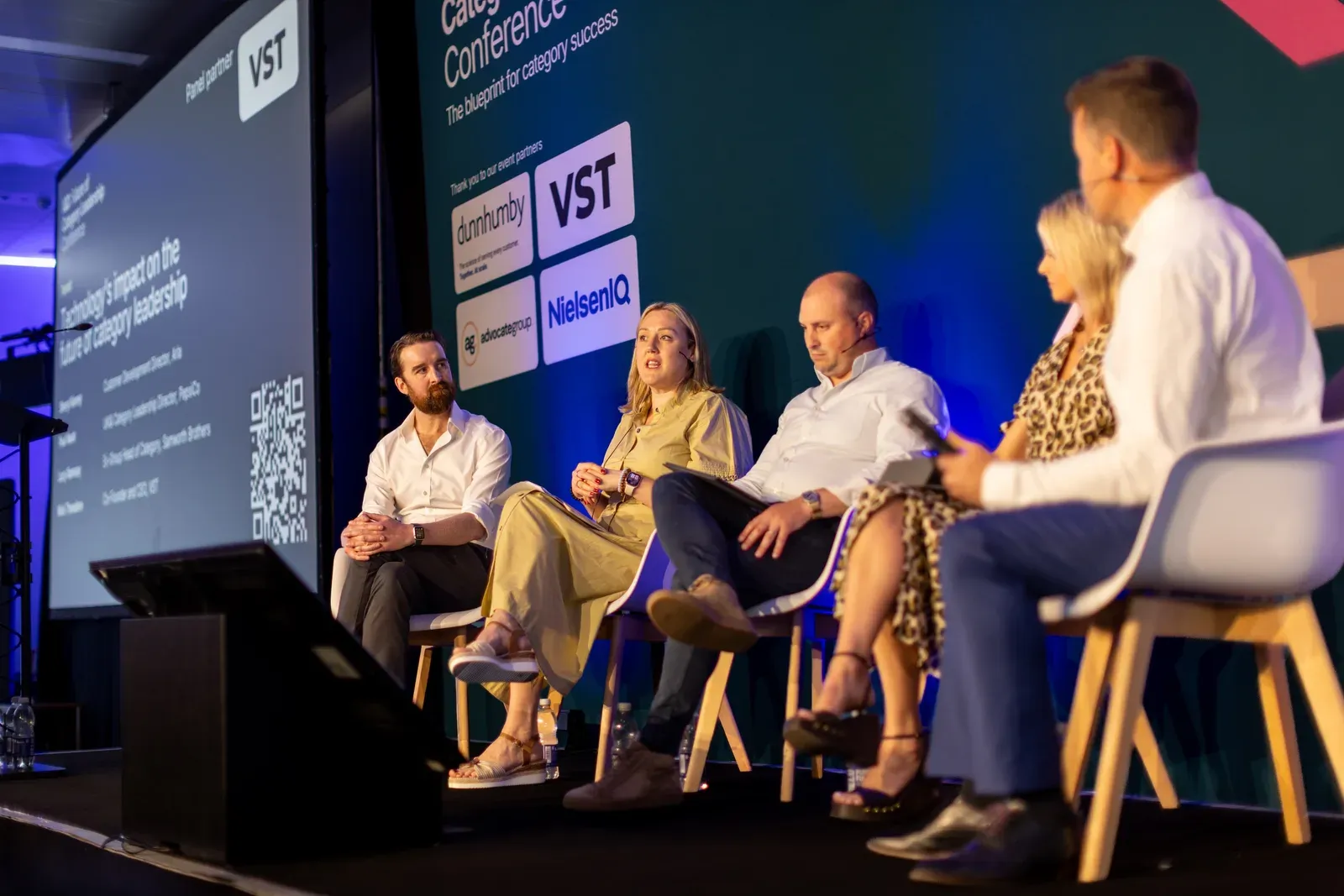
“100% yes”
That was Nick’s answer when the panel asked whether AI is ready for the real work of category management. Not a pilot. Not someday. Now.
A couple of months ago, the Vazen team deeply integrated AI into its core products, giving it the ability to query billions of rows of in-store, transactional and shopper data built up over years. Within moments it was producing the kind of category analysis that would normally take weeks. “It felt like we had suddenly become the best category managers in the world,” Nick said.
The point for the room was not the size of the dataset. It was that the technology has quietly crossed a line. For the first time it works reliably against real data, on real category questions, with answers you can trace straight back to source.
The spreadsheet days are over
What makes this matter day to day is something simpler than it sounds. You can now ask questions of your data in plain language and get a clear answer back, also known as conversational analytics. At Vazen that already runs across the team, for category visions, store performance, new product opportunities, space and flow.
“We are at a point where no one in a category team needs to open a spreadsheet again,” Nick said. “That is either frightening or exciting, depending on where you sit.”
He sits firmly in the second camp, and this is the reassuring part for anyone worried about what AI means for their role. The job does not disappear. The grind does. The hours you spend wrangling data come back to you for the commercial, creative work that actually moves a category. As Nick put it, “it is like releasing superpowers into the industry.”
The work that made this possible
There is a catch, and it is the most important thing to understand. All of this depends on the data underneath it. Organised well, AI works today. Organised badly, it does not work at all. “The model is only ever as good as the foundation it sits on,” Nick said.
We can say that with some confidence, because it is the work we have been doing for years. If you know Vazen, you will know us for the less glamorous end of the industry - capturing, cleaning and structuring planogram and transactional data, store by store and line by line. We have not always talked about AI, because for a long time the groundwork had to come first.
That groundwork is exactly why AI is ready for us now. The years spent getting the data right are the reason we could point the latest models at it and get answers that hold up. The foundation the whole industry is now realising it needs is the one we have been quietly building all along.
For your own team, that is the encouraging part. AI is ready. The real question is whether your data is in good enough shape for it to do something useful, and getting that right is the work that unlocks everything else. It is the honest place to begin, and it is not a place you have to reach on your own.
Nobody has it all worked out yet
When Edison invented the phonograph, he was convinced it was a machine for office dictation. He ranked playing music near the bottom of its uses. Twenty years later, he admitted that amusement had been the point all along.
Inventors rarely work out what their technology is really for. And that, Nick told the room, is the encouraging part for category professionals. We have built the capability. What it is best used for, in the messy reality of a specific category, is still being worked out, and it will be settled by the people doing the work rather than the people who built the models.
Which is why his advice was to start talking to your technology partners early. The best ideas tend to surface in the conversation between people who know the data and people who know the category.
Where to begin
If your team is at the start of this, a few things help.
You do not need to be technical to get value, but you do need to bring in the people who are. More conversations with IT and data colleagues are a healthy sign, not a hurdle.
Choose tools on the strength of the data and the results behind them, rather than the name on the box.
And above all, get hands-on. As Nick put it, “how optimistic someone is about AI is proportional to how much they’ve used it.” The teams that experiment, even in small ways, are the ones that move ahead.
The category leader of 2030
Less different from today than people fear, in Nick’s view. Still commercially curious, still experimenting, still human. What changes is the support around them, a set of capable assistants handling the heavy lifting so people can focus on the decisions only they can make.
The technology is ready. The teams that get their data foundations right now will be the ones writing the next chapter of category management, rather than catching up to it.
Wondering where your team would start?
We help brands and retailers get more from their shelf, planogram and shopper data, from virtual shelf testing that proves what works before anything reaches the shelf, to live, store-level planograms. If something from the day raised a question about your own category, fixture or ranging work, we would be glad to show you how it works.